You know there are Democrats who could lead our country better, but you don't know who deserves your donation.
You've given to political causes and candidates. You routinely make donations, and in a big election year you try to meet the moment.
You gave to campaigns for Obama, Clinton, Biden, and Harris.
You've given to Senate candidates. Some down ballot races. A few PACs.
Not a lot, but something.
It's gotten harder though.
You don't know if it's even worth giving to anyone in 2026.
You're wondering:
>> With millions pouring in from dark money groups, can my small donations make a difference?
>> With democracy under attack overall, will this year's elections be at all fair?
You also might be wondering:
>> With Democrats lacking cohesive messaging or opposition solidarity, who's going to effectively lead?
I was wondering all the same things.
So I came up with an answer.
2026 is not a typical election year
This isn't a normal midterm cycle, and not just because the stakes are so high.
There's a wave building, and it's not being generated by the establishment or adhering to a corporate agenda.
Within the past few months:
A union machinist beat a Trump-backed candidate in Texas by 31 points
A Democrat won the seat in the FL legislature that represents Mar-a-Lago
A progressive candidate defeated an establishment Democrat in a New Jersey special election
Another young progressive candidate came within 1 point of unseating an incumbent Democrat in NC
Our country is deeply divided and dissatisfied with the status quo.
But people also are realizing that power exists everywhere, and good leaders matter at every level of government.
The American people are reclaiming their government, seat by seat.
Across the country upstart candidates are rejecting PAC funding, are speaking directly to the needs of voters, and are generating real enthusiasm and turn out.
They are more authentic and transparent than the establishment favorites.
And the most exciting part?
If you can pick the ones capable of managing a scrappy campaign, your dollar can go REALLY far.
Introducing: The 2026 Democracy Investment Guide — Senate Edition
A lot of important political races that will impact the future of our country are happening at the local and state level.
However, what you've probably heard the most about are some of the high profile Senate races.
Obviously control of the upper-chamber of Congress, which hinges on only a few key races, is attracting enormous amounts of attention.
And dollars.
Deservedly so. The Senate controls the confirmation of judges and the ratification of treaties. Senators serve 6-year terms, with no term limits. You can't remove a president from office without a 2/3 majority of Senate signing off.
Suffice it to say, each of these 100 lawmakers has an incredible amount of power, and if you're investing at all in political races in 2026, the Senate has to fit into your strategy.
But it shouldn't be all, or even most, of what you give to this year.
Instead, investing in a few key Senate races, at about 10% of the total you'll budget for investing in public leaders, is the way to go.
The Democracy Investment Guide (DIG): Senate Edition tells you exactly which Senate candidates deserve your money, time, and attention in 2026 — and which ones don't.
Here's what's inside this deeply researched, 18-page PDF:
✅ A 6-point evaluation rubric that scores candidates on leadership quality first — courage, organizational track record, actual movement credentials — and then considers the nature of their race and the chances investing in it make a difference.
✅ Hard screens applied up front — explicit positions on Gaza and Trump accountability. If a candidate is complicit in genocide or won't hold lawless power accountable, they're out. Full stop.
✅ Ranked Senate recommendations for candidates who earned their spot — including non-establishment Democrats and two Independents. No one's in here because they raised the most money or have the right friends.
✅ Portfolio allocation logic for three budget tiers (under $500 / $500-5K / $5K+) — considering how best to balance certainty, efficiency, and possible return on investment
✅ A goal-setting exercise to help you decide how much of your time, money, and energy belongs here vs. your local work — because you shouldn't be doing everything, and this guide won't tell you to
You'll also receive a thoughtfully written daily email in the first ten days to help you actually use the thing, while time is of the essence.
Who built the Democracy Investment Guide?
You won't find candidates here because they have a (D) next to their name.
My name is Joe Ballou and I've spent the last 22 years taking my role as citizen seriously. I first knocked on doors in Pennsylvania in 2004, led the College Democrats for two semesters, and earned a Political Science degree in 2006.
I initially aligned with Democrats because I saw how disastrous Bush's economic and foreign policy was for our country.
When I became a history teacher through Teach For America, I started investing a portion of my modest salary in exciting races.
I never earned a dollar for political work - the money only flowed one way.
I never became part of a party apparatus. Professionally, I worked in non-profits and business. I really just wanted to see the right people in office, and the right policies enacted so our country could expand opportunity for the future.
After Citizens United when the flood gates opened for corporate donations to politicians, I didn't give up. I saw it as my duty to try to counteract that however I could.
It's the least I could do given what my ancestors gave to this country (dating back to before the Revolutionary War - more on that another time).
Everywhere I could, I aligned my career to advancing democratic values, even if I stayed out of electoral politics.
I started an educational gaming company called Civic Games. I wrote curriculum and trained teachers at a charter school network called Democracy Prep.
,
Since 2016 I've given over $51K to political groups and candidates, mostly small donations - 1,628 unique transactions on ActBlue alone, averaging $31.67.
Through my experience in investing, business strategy, and technology leadership, I've also figured out a few ways to optimize resource allocation to get a desired return.
I now have a pretty good idea about when my dollars made a difference, and when they got flushed down the toilet.
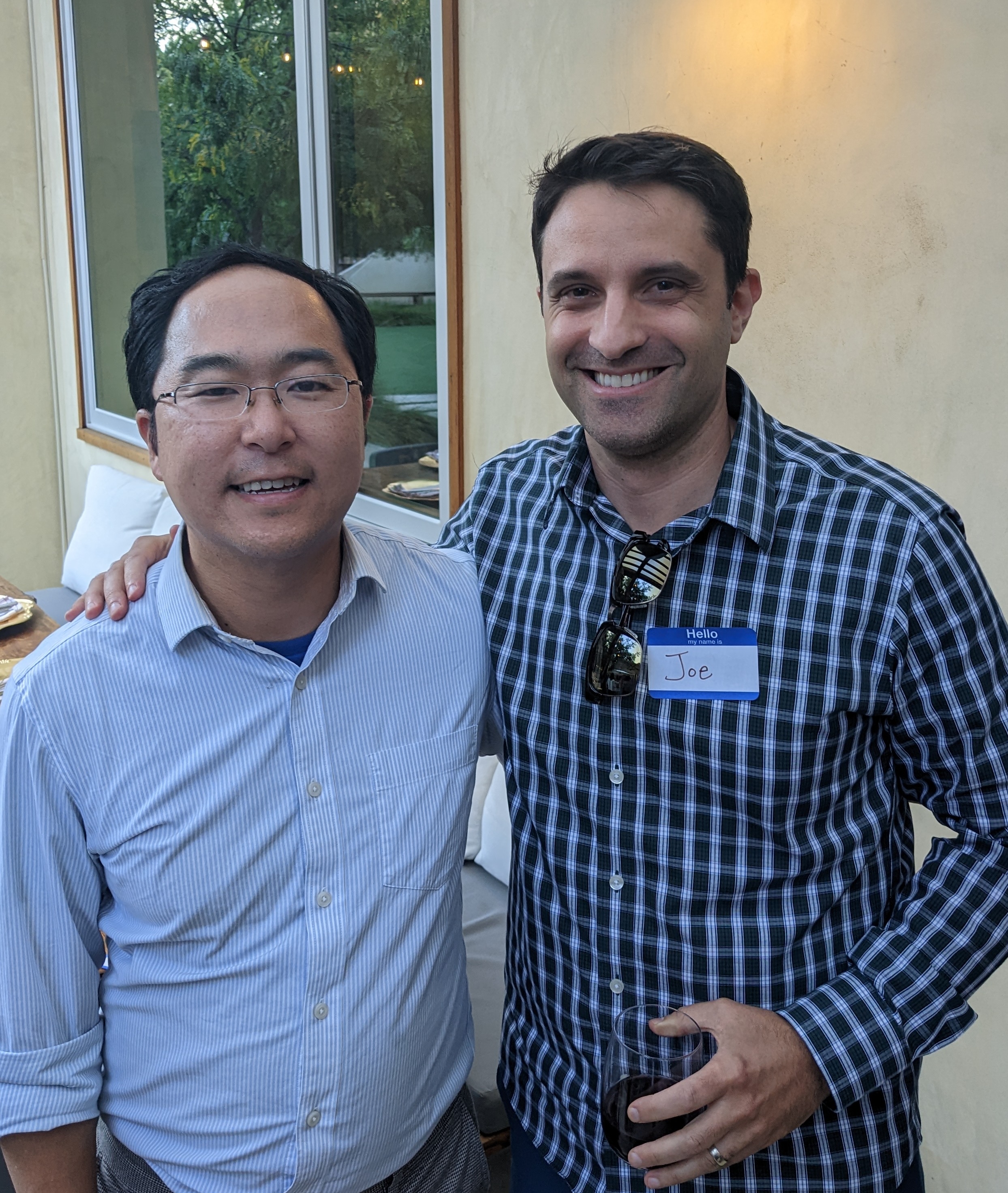
One of the investments I'm most proud of is backing Andy Kim in late 2017, when he first stepped up to run for the US House. Last year, he became the junior Senator from NJ, and has earned his reputation for principled and effective leadership.
I built this guide so you can apply the lessons I've learned to elevating the leaders and organizations that matter.
I don't want you to waste your hard earned dollars on the wrong races, or the wrong candidates.
I also don't want you to waste your time doing research I had done for myself.
I spent 100+ hours to refine a proprietary evaluation rubric based on my 22 years of experience, and researched 101 Senate candidates, leveraging AI so that this effort represents what would have taken a small analyst team many more hours to compile.
The resulting recommendations point to Democrats who aren't establishment favorites. Two Independents. And no Republicans — not because of party, but because none cleared the bar. If a Republican had, they'd be in here.
This is about building a Senate that can govern with integrity. Not just flipping seats.
Why does this cost $7?
What would it be worth for you to skip hours of research and still believe that you were backing leaders who were truly serving this country?
What would it be worth to make a few focused donations that you know will move the needle?
I bet it's a lot more than $7.
If I priced this guide to match the value it offers, I'd probably have made it closer to $70 than $7.
But I also hope $7 is an easy decision for you. Even if you've got a small budget for investing in the right leaders, I didn't want to make price a barrier.
So why didn't I just give it away?
Putting a price on the guide helps me fund the ads needed to reach a broader audience. It pays for a tiny portion of what it costs to build and host the guide, and follow up with you after.
Putting a price also means that it's more likely that the guide lands in the hands of people who actually plan to use it.
Most free stuff gets forgotten.
Bottom line:
This guide needed to be priced,
it's worth way more than $7, but
it's ONLY $7 so you can pick it up without overthinking things.
Let's get started working together on saving our democracy without delay.
OK, so what happens after you order?
Today: Welcome email confirming your purchase + a link to download
Over the next 10 days: a series of emails that walk you through the guide and how to take action
Now available! I just finished putting together two companion guides: The DIG: US House Edition and The DIG: Orgs Edition (Parties, PACs, and non-profits defending democracy). On the next page if you'd like to purchase the full National bundle DIG, you can add these to your cart with a simple click, and you'll even get a file with ALL the data on the candidates I reviewed, so you can do your own analysis.
The most important thing about picking up the DIG: you'll become part of the Timeless Leader movement, which is all about empowering everyday leaders to build a positive, lasting legacy.
The only way we'll do that is by working together, and creating the conditions for future leaders to continue lifting each other up and steward the systems that make life livable and society function.
Still thinking about it?
The leaders who will define the next decade of American politics are running right now. Some of them are in this guide.
The ones who win in 2026 — especially the upstarts running in races nobody thought were winnable — will carry that origin story with them for their entire careers. The people who backed them early will have been part of something real.
And you know what's on the line: the Senate you help build in 2026 will confirm the next generation of federal judges, determine whether any check exists on executive power, and set the foundation for whether this country remains a place where what you're building has stable ground under it.
You've cared about this country your whole adult life. You deserve a framework that matches that commitment.
Maybe you didn't know a guide like this existed. Now you do. And you can't unknow it.