You vote for Democrats,
but the party establishment pisses you off.
I've spent 22 years in and around Democratic politics.
Not as an operative or politician. As a citizen, a student and teacher of history and leadership, a son, husband, brother, and father, who is deeply concerned about the direction of our country.
Since the Bush tax cuts and the Iraq War it's been clear to me that the Republican party has deep rot.
But Democrats?
The story is more complicated.
Here's what I know: the two-party system is broken, the Democratic party leadership is spineless, and 2026 may be our last, best hope to set the US on a better course.
It can be tempting to write off all the ads and appeals for politicians claiming to be the best hope for America, when clearly, for the most part, that's simply not true.
The question isn't whether to engage — it's how to engage without selling out, burning out, or throwing your money at candidates and causes who don't deserve it.

(A photo I took of the US Capitol in 2016. Things were calmer back then, outside and in).
Something Shifted After 2024
You felt it. Everyone did.
In 2024 the Democratic establishment spent a billion dollars to run a centrist message and create good vibes on TikTok, while avoiding tough questions about Biden's health, policy missteps, and a straight-up fiasco in the Middle East.
We know what happened on November 5th.
While accusations raged and party operatives underwent endless debates, Trump and his Project 2025 allies wasted no time tearing down 80 years of institutional guardrails, norms, and programs, shitting on the Constitution, and gutting foundational pillars to our economy.
With most representatives in DC fundamentally detached from the pain of everyday people, communities across the country went beyond a few symbolic protests and started taking democracy into their own hands.... and they started winning.
Now just within the past few months:
A union machinist beat a Trump-backed candidate in Texas by 31 points
A progressive candidate defeated an establishment Democrat in a New Jersey special election
The DLCC went 26-0 flipping state legislative seats
Two progressive candidates in Texas outpolled every Republican in their races
This isn't a political party leaning into the grassroots. This is people reclaiming their own government, seat by seat, state by state.
Candidates who actually stand for something are winning, funded by people who stopped waiting for the DNC to figure it out.
2026 stands to be a wave cycle - not for a party, but for the PEOPLE.
Will you help make it happen, or wait on the sidelines and hope enough other people pull their weight?
You're already doing a lot of good work
You're already doing things. Local volunteering at your school or church. Mutual aid. You give to the Red Cross or IRC after a disaster. You gave to Obama and maybe a few other candidates over the years.
But over the last 15 years national politics feels like a black hole — a place where money disappears, integrity gets compromised, and the same consultants lose the same races in the same ways.
So you stay local. Which is right.
Until it isn't.
Because here's the thing nobody doing good local work likes to think about: Congress decides whether any of your local work survives the next 4 years. Congress determines: Judges. Agency leaders. Funding for healthcare and education and public safety and infrastructure.
Through the laws it writes and its orientation to the executive branch, Congress determines if federal protection exists for the things you're building...
or exists to obstruct and hinder and dismantle the stability that communities need to survive and thrive.
We're talking about the basic systems that civilization relies on: from water and food safety to bridges and international agreements.
Even The Rule of Law itself.
You can run the most beautiful mutual aid network in your city and watch it collapse under crisis when the wrong people let the whole house burn down, just so they can rule over the ashes.
You don't have to love electoral politics to recognize that who sits in Congress matters.
You just need to know where your effort makes a difference — and where it doesn't.
Introducing: The 2026 Democracy Investment Guide — Senate Edition
On March 17th, I'm publishing for the first time a focused, 15-page PDF that tells you exactly which Senate candidates deserve your money, time, and attention in 2026 — and which ones don't.
This isn't a guide for people who give money to every ActBlue email they get with a flashing red button.
This is a guide for people who are skeptical of that whole machine.... but still want to engage.
Here's what's inside:
✅ A 6-point evaluation rubric that scores candidates on leadership quality first — courage, organizational track record, actual movement credentials — and then considers the nature of their race and the chances investing in it make a difference.
✅ Hard screens applied up front — explicit positions on Gaza and Trump accountability. If a candidate is complicit in genocide or won't hold lawless power accountable, they're out. Full stop.
✅ Ranked Senate recommendations for candidates who earned their spot — including non-establishment Democrats and an Independent. No one's in here because they raised the most money or have the right friends.
✅ Portfolio allocation logic for three budget tiers (under $500 / $500-5K / $5K+) — considering how best to balance certainty, efficiency, and possible return on investment
✅ The 2026 wave environment explained — five data points showing why this cycle is different, and why the usual "nothing matters" cynicism is actually the establishment's best friend right now
✅ A goal-setting exercise to help you decide how much of your time, money, and energy belongs here vs. your local work — because you shouldn't be doing everything, and this guide won't tell you to
✅ A 6-email sequence in the first ten days to help you actually use the thing, not just read it once and forget it
This Isn't a Partisan Guide. It's a Leadership Guide Applied to Politics.
You won't find candidates here because they have a (D) next to their name.
I've spent 22 years as a committed citizen. I first knocked on doors in Pennsylvania in 2004, led the College Democrats for two semesters, and earned a Political Science degree in 2006. I became a history teacher through Teach For America, and started investing my hard earned dollars in races in my early 20s. I never earned a dollar for political work - the money only flowed one way.
I really just wanted to see the right people in office, and the right policies enacted so our country could expand opportunity for the future.
I saw it as my duty, given what my ancestors gave to this country, dating back to before the Revolutionary War. (more on that another time)
Since 2016 I've given over $51K to political groups and candidates, mostly small donations - 1628 unique transactions on ActBlue alone, averaging $31.67.
I have a pretty good idea about when these dollars made a different, and when they got flushed down the toilet.
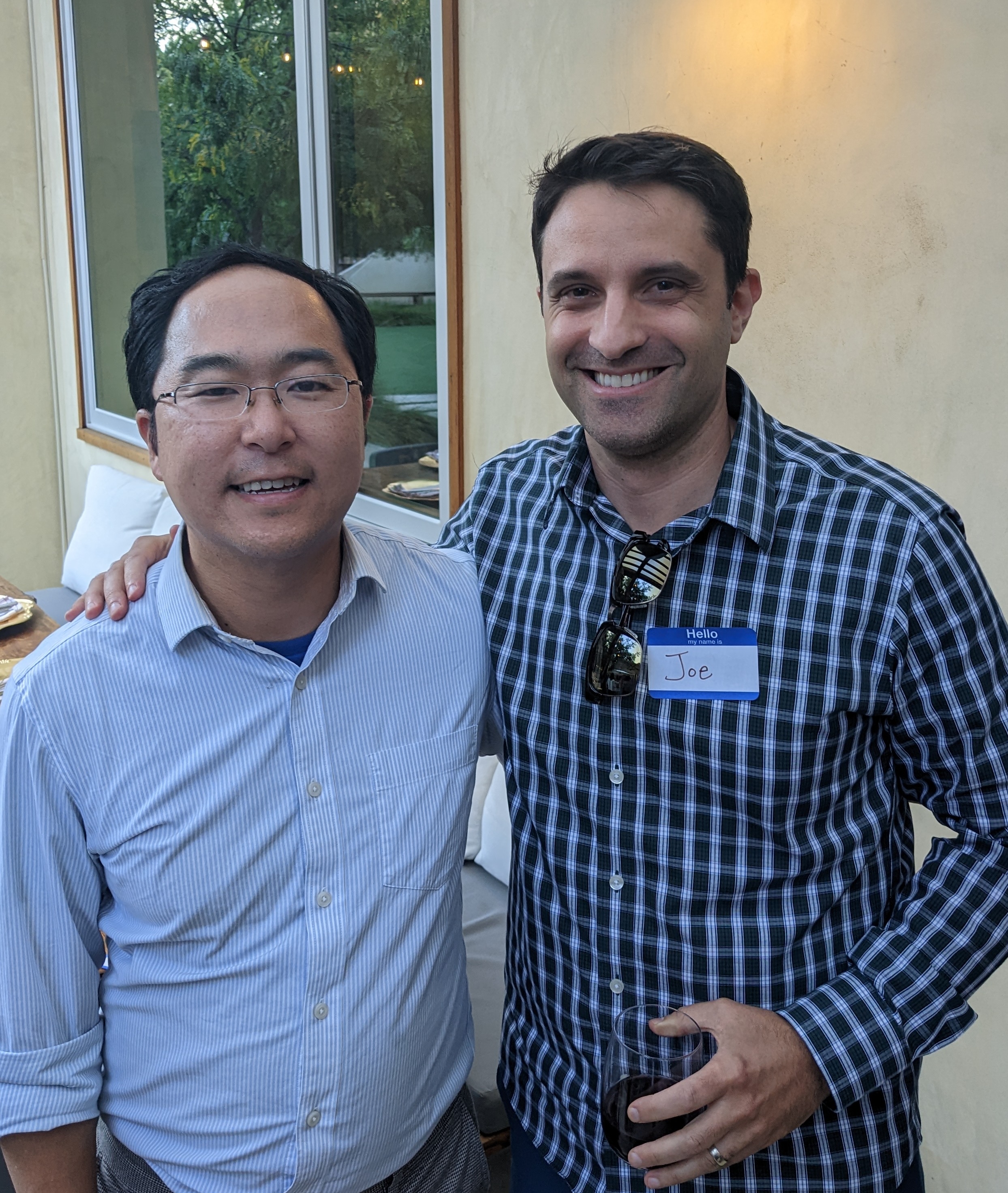
(One of the investments I'm most proud of is backing Andy Kim in late 2017, when he first stepped up to run for the US House. Last year, he became the junior Senator from NJ, and has earned his reputation for principled and effective leadership.)
I built this guide so you and I can apply the lessons I've learned to elevating the leaders and organizations that matter.
And with my experience working in Silicon Valley, building investment portfolios, and using AI to build businesses, I spent 100+ hours with Claude to refine a proprietary evaluation rubric and research over 80+ Senate candidates so you don't have to.
The resulting recommendations point to Democrats who aren't establishment favorites. Two Independents. And no Republicans — not because of party, but because none cleared the bar. If a Republican had, they'd be in here.
This is about building a Senate that can govern with integrity. Not just flipping seats.
Who This Guide Is For
You believe in democracy and you're tired of defending a party that keeps letting you down.
You lead people at work and in your community. You're building real things. But whenever you look at the national picture you shudder with the thought that nobody looks like they can fix this. And if you're honest, you haven't figured out how to engage with it either.
You're exhausted when you drink from the fire-hose.
The emails never stop. The fundraising asks never stop. Every week there's a new urgent race, a new existential moment, a new thing you're supposed to care about. You've learned to mostly ignore it — but you know that's leaving some pretty kick ass leaders without crucial support that could make a real difference.
You want to focus, not abandon ship.
You're not checked out. You just haven't found a framework that respects your skepticism, applies actual rigor, and gives you permission to concentrate your effort instead of spreading it thin.
You care about what you're building long-term.
Whether it's a mutual aid network, a local organization, or just your own integrity — you're playing a long game. And you'd like to make political investments that protect all this, and so that you can believe that this country will be a place that provides the same opportunities for your kids that you had.
Maybe even better.
If you order before March 17 you'll get a $26 bonus, free.
In addition to the Senate guide, by pre-ordering today you'll also get the upcoming DIG Local Edition: Mapping Your Neighborhood Democracy training included at no charge — a $26 value.
This ~40-minute screen-share training will show you how to build a complete local democracy investment guide from scratch, live in Claude.
You'll watch me map a real local landscape, apply the same evaluation rubric from this guide to local candidates and organizations, and walk away with a process for figuring out where your 10% local allocation actually goes.
This is the part no national guide can do for you. Every community is different. This training gives you the tools to finish the job yourself.
(Can't find the time? It's yours to keep and watch whenever.)
Why does this cost $7?
What would it be worth for you to skip hours of research and still believe that you were backing leaders who were truly serving this country?
What would it be worth to make a few focused donations that you know will move the needle?
I bet it's a lot more than $7.
But I also hope $7 is an easy decision for you. And I hope when you get the guide, you'll feel like you have the resources to take action.
$7 doesn't ask you to trust the system. It gives you a way to engage with it on your terms — with clear criteria, hard screens, and no obligation to fund anyone who doesn't deserve it.
And if you decide after reading it that none of these races are for you? You'll at least know why — which is worth more than another year of vague unease.
OK, so what happens after you order?
Today: Welcome email confirming your purchase + what to expect
March 17: Full PDF delivered + DIG Local Edition training drops
Over 4 weeks: 6-email sequence walks you through personalizing your strategy and deploying where it matters
March 31: DIG Rising Edition (House, State & the Organizations Fueling the Wave) launches — pre-order buyers get first access
Now what?
This is a moment for courage. For collaboration. For action.
This guide exists because democracy doesn't exist without active, engaged citizens who will invest in its future.
By backing leaders you can trust and share your values, and races that can meaningfully shape who holds power, you're being one of those citizens.
Maybe you didn't know a political guide could exist to help you with this.
Well, now you know. And you can't unknow it.
Delivered March 17, 2026 Includes DIG Local Edition training ($26 value) — free for pre-order buyers.